Sidewalks | Train Maps | Pickup Trucks
Bryan Koemptgen | May 2026
When moving to Europe, I wanted to experiment with a different way of living – living smaller. Simpler. Part of that experiment has been a conscious decision to see how long I can go without owning a vehicle.
Some of it was practical. We live in the middle of a major city where even parking feels like psychological warfare. The streets in our neighborhood are lined bumper-to-bumper with BMWs, Mercedes, Audis, and Porsches, all at constant risk of accumulating a nasty layer of bird shit beneath apartment balconies.
But most of it was curiosity.
Thirty-five years ago, I lived in Chicago without a car. I learned that city through sidewalks, bus and train maps, and wherever my bike could take me. Part of me wanted to know if I could live that way again — and what it would feel like 35 years later.
Somewhat surprisingly, there are parts of it I’ve genuinely grown to enjoy again.
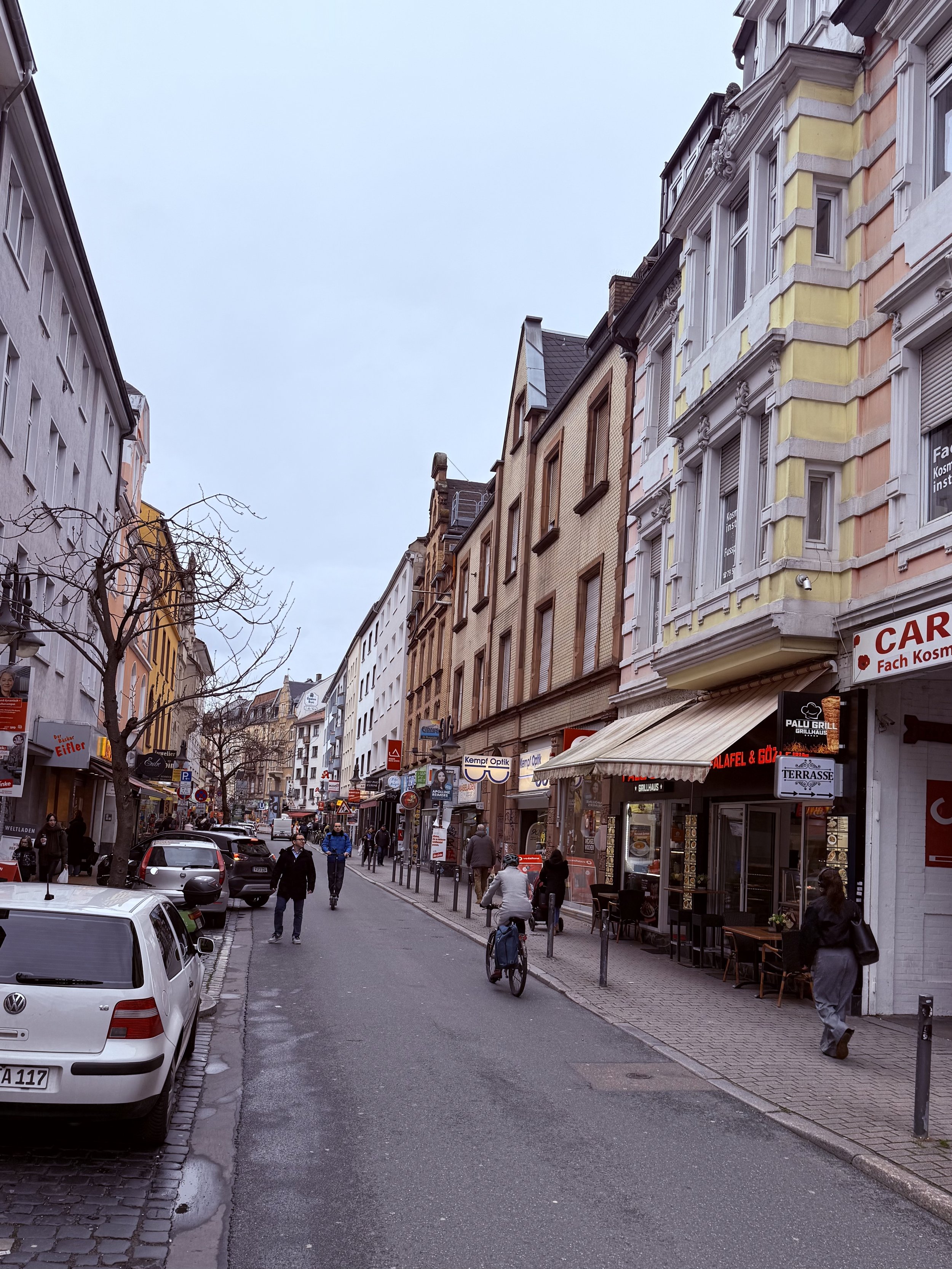
I don’t go on walks anymore. At least not for the sole purpose of exercise or getting fresh air. Walking has just become part of daily life. I average 15,000 steps a day without trying. Grocery store. Train station. Dining out. Dry cleaners. Every errand. Walking Jennifer to work and back home again at the end of the day.
Those walks to and from work have become a favorite. Something about walking side-by-side seems to free up conversation. We talk about what happened during our respective days, what we should do this weekend, whether moving to another continent was a brilliant idea or completely ill-conceived.
Living without a car also changes the math of everyday life in little ways. At the grocery store, every purchase gets mentally converted into carrying weight. I avoid purchasing things in glass bottles simply because I don’t want to haul them five blocks home in a backpack.
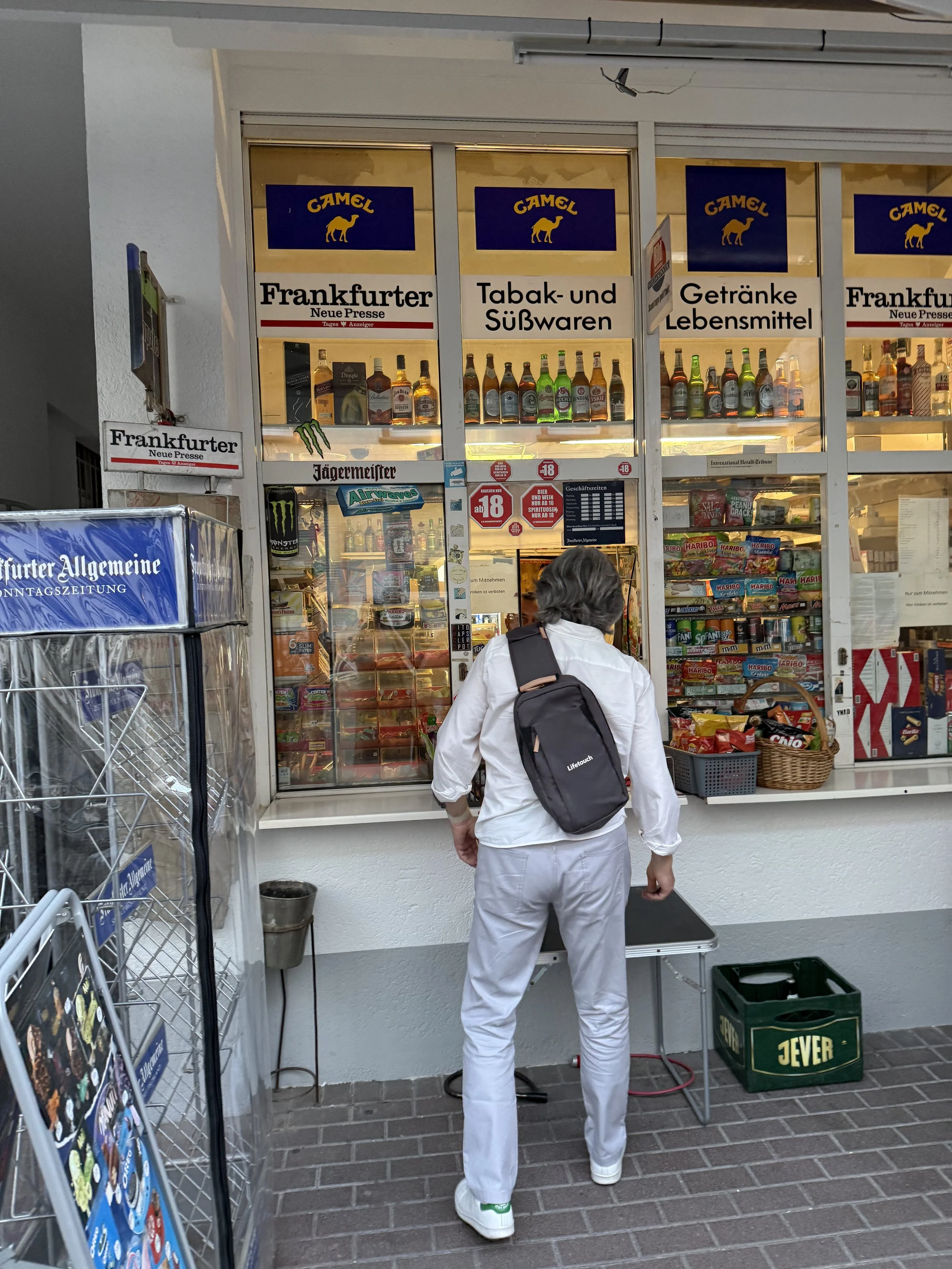
Learning my new environment has felt methodical, as if the neighborhood itself expanded outward in concentric circles. At first, I only knew the streets immediately around our apartment. Then a few more. Then a few more after that. I started taking different routes home just to see what was down a previously unexplored street. Sometimes I get off the U-Bahn a stop early or later for no reason other than curiosity. I’ve learned which kiosks stay open late enough for me to grab a beer on the walk home.
It was during an early neighborhood exploration that we discovered the kleingarten tucked into the middle of our neighborhood. Kleingartens are garden plots neatly sub-divided into little worlds of sheds, flowers, vegetables, lawn chairs, and old couples meticulously tending poppies, foxglove, and lupine. Hidden in the middle of our kleingarten is a gasthaus where we have somehow become regulars. The staff greets us with a hug – something that feels very un-German. We bring a cribbage board. She discovers new German wines. I sip pilsners. And we work our way through the seasonal menu.
This version of life feels smaller, but more detailed.
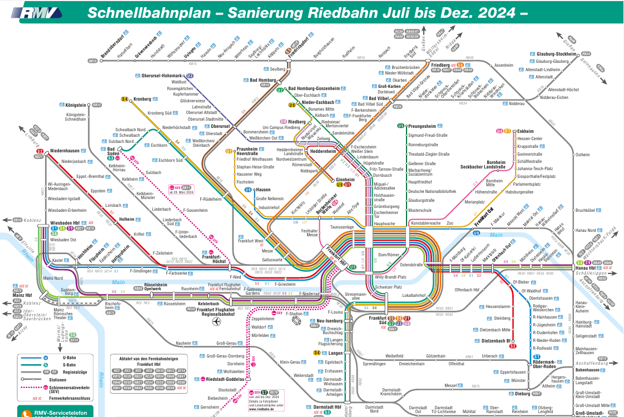
I know Frankfurt in greater detail after a few months without a car than I would with one. Studying transit maps, getting turned around and lost does that. I’ve learned train connections, neighborhoods, street names, and which side of the platform to stand on.
I started giving myself a once-a-week challenge: pick a new train, subway, or tram line and ride it all the way to the end. If something interesting catches my attention, I hop off and explore for a while until the next train comes.
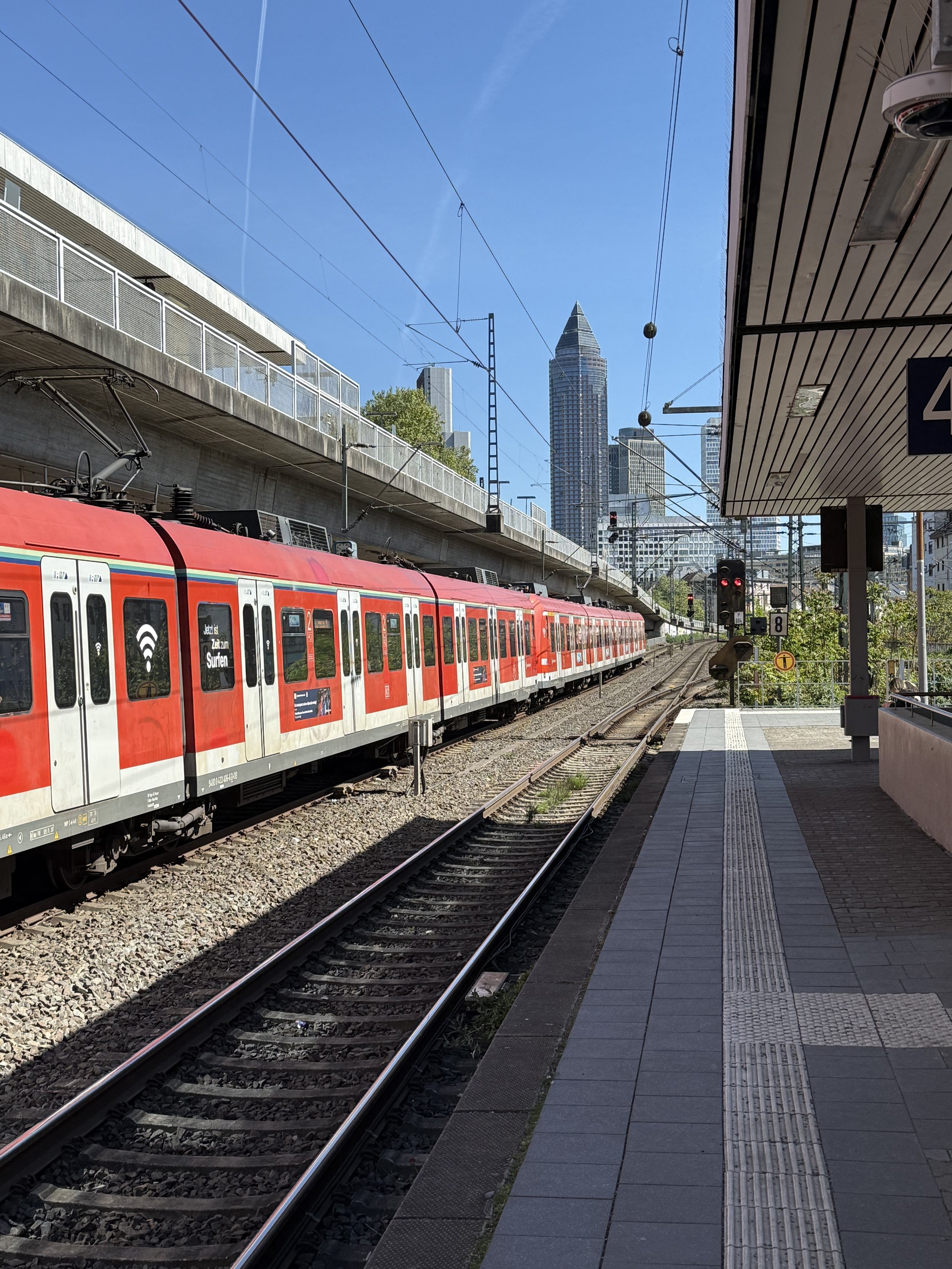
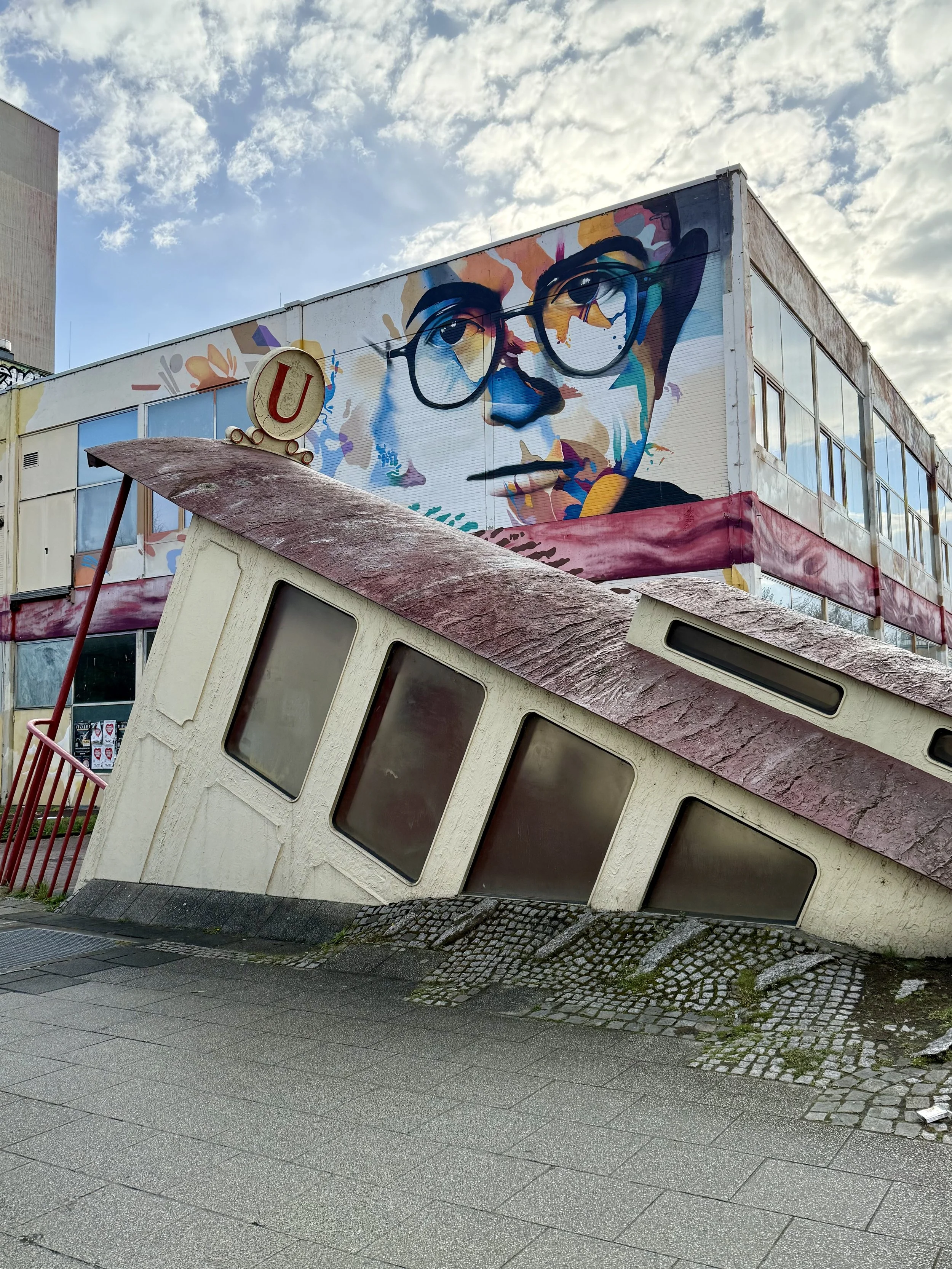
Public transportation is not glamourous. A few weeks ago, I took a regional train from Luxembourg back to Frankfurt partly because the fare was covered by my Deutschlandticket. Between Koblenz and Frankfurt the train turned into a cattle car. People stood shoulder-to-shoulder for the entire 2.5-hour trip while more passengers squeezed aboard at every stop. Since I was not getting off until the final stop, I strategically wedged myself into a corner jump seat early. At one point a little boy — maybe six or seven years old — was sitting on his mom’s lap next to me and grabbed onto my leg for balance thinking it belonged to his mom. With no need to embarrass him or his mother I didn’t flinch and simply became part of Germany’s transportation infrastructure.
Riding trains has shown me parts of Europe I never would have otherwise seen. Not tourist Europe. Just regular life. Apartment blocks. Castles. Graffiti-covered sound barriers. Vineyards and golden fields of canola. Tiny villages with laundry hanging on porches. Old ladies hanging out their windows patrolling their neighborhood. Industrial neighborhoods. Soccer fields beside train tracks. The in-between parts of countries.
After a couple months without driving, I rented a car while visiting family in Denmark. The moment I pulled onto the road, I felt it – freedom.
No schedule. No connections. No crowded train cars. No checking apps to see if I had three minutes or twenty-three before the next train arrived.
A sense that I was in control.
I even volunteered to chauffeur family around because driving felt so good. Saturday afternoon I dropped my passengers off in downtown Aarhus to shop, then drove to the Baltic Sea and sat near the water reading a book until they called for a ride home.
That afternoon reminded me of something I already knew about myself. I’m 100% American. I love the open road. I love road trips. I love deciding to go somewhere and simply going there.
You can only walk so far.
Trains take you from town to town, but usually not to a trailhead.
Living without a car has pushed me outside my comfort zone. It has forced me to slow down. To notice more. To understand a city from ground level instead of passing by a windshield.
But I also know this: when I get back home, I cannot wait to climb back into my pickup truck and haul something completely unnecessary across town just because I can.