The Other Kind of Silence
Bryan Koemptgen
July 2026
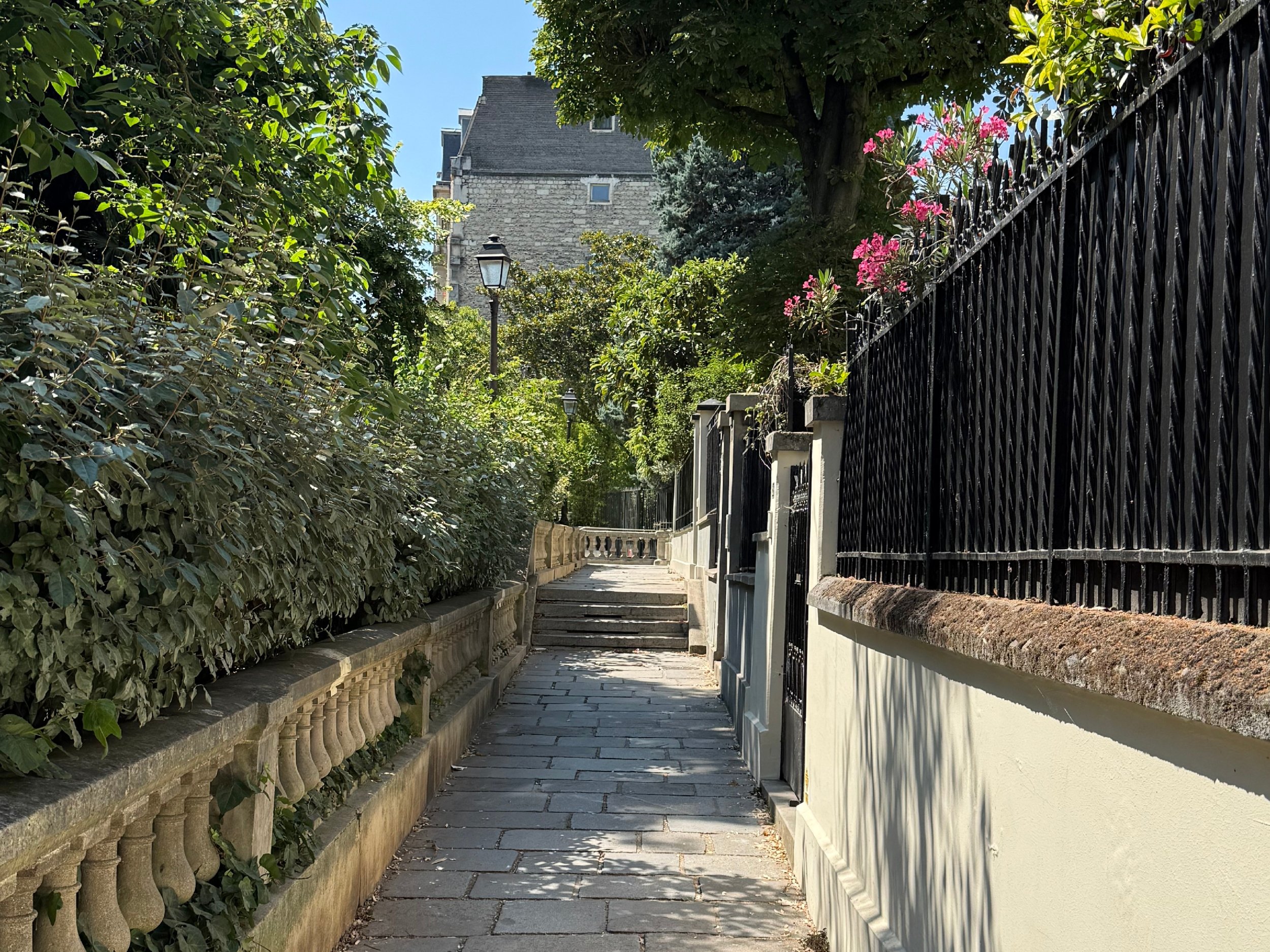
Listening for Silence
Every Thursday at exactly 6:58 p.m. an alarm on my phone goes off. When it sounds, I stop whatever I'm doing and say a short prayer. If anyone from my immediate family is nearby and hears the alarm, they know what it means as well. We look at each other and say, “It's 6:58 on Thursday."
In Minnesota another Jesuit silent retreat is beginning. There is a room full of 60 men that have gathered and are making conversation with strangers or catching up with a handful of guys they haven't seen since this same retreat last year. At 6:58 after a short welcome message and a quick prayer, they file into the dining room. The guys experiencing their first retreat do not know it, but the seat that they choose for this dinner is the same seat that they will sit in for every meal for the next 72 hours.
Dinner will end and silence will begin. The men experiencing their first silent retreat, are undoubtedly wondering what they got themselves into. I can empathize with them. Fifteen years ago, I was sitting in that same dining room asking myself the same question.
My buddy Ed first invited me to a Jesuit silent retreat. He didn't sell me on it. He didn’t tell me it would change my life. Over the years he talked about his experience and then asked if I'd like to join.
I'm not entirely sure why I said yes. Actually, that's not true. I didn't think about it. That is how I approach most things in life. People often say they'd like to try something someday. I somehow manage to skip the overthinking part and just do. Worst case or best case — I experience something I'd never have experienced otherwise. “Yes" always leads to better stories than "maybe."
The retreat takes place at the Demontreville Retreat House in Lake Elmo, Minnesota. It begins Thursday evening and ends Sunday after dinner.
Each retreat is led by a Jesuit priest. Each retreat director has his own style, but the structure is the same — a series of 14-15 conferences followed by time of reflection.
You bring no electronics: no laptop, no iPad, no watch, you leave your phone in the car. They discourage bringing books unless they will actually help your retreat. If you attend the same weekend every year you end up staying in the same room year after year.
The daily menu is the same year after year. My favorites are Friday lunch with coconut shrimp which reminds me of dinners with my grandma at Country Kitchen and prime rib for the final meal on Sunday – the rarer the better. Saturday evening features a disgusting Midwestern version of chow mein like my mom tried to serve us as kids straight out of a La Choy can. Every year I leave it untouched in quiet protest and the hope that someone in the kitchen notices. Fifteen years later, they're still serving it. Some traditions are stronger than my optimism.
After the first dinner everyone walks to the chapel to meet the retreat director and the initial conference begins. The chair you choose in the chapel for the first conference becomes your chair for the weekend. It is one less decision you'll have to make.
When this first conference ends, at their own pace people stand, head outside into the night, and walk to their room sneaking in a smoke along the way if need be. No one says goodnight.
The next morning you will pass the same people without exchanging a word. The first time I experienced that, it felt unbelievably awkward. Do I nod? Smile? Pretend I don't see them? I remember overthinking every encounter.
Eventually I stopped worrying about it. Eye contact became enough. A slight smile. A nod. Without saying anything, you somehow acknowledged another person's presence. There is more communication happening than I initially realized.
The days settle into a rhythm — Morning prayer. Breakfast. Conference. Reflection. Conference. Reflection. Lunch. Nap. Rosary. Conference. Reflection. Conference. Reflection. Mass. Dinner. Free time. Adoration. Conference. Lights out. Repeat.
You don't need a watch because the chapel bell rings five minutes before every activity. You stop wondering what time it is and eventually stop caring. That is when something else begins to happen. You start noticing things.
People assume the silence is what makes the retreat special. It is only part of it. The real gift is that the retreat slowly removes almost everything competing for your attention. You don't wonder what's next because the bell tells you. You don't wonder what time it is because time hardly matters. You don't scroll through headlines because your phone is sitting in the glove compartment of your car. You don't spend energy deciding where to sit. Or what to do next. Or where you are supposed to be. Hundreds of tiny decisions disappear.
The Jesuits call it being predisposed.
The retreat assists you in becoming predisposed to the experience. It does not promise that you'll have some profound spiritual awakening. It does not guarantee clarity. It creates the conditions where clarity has a chance.
Much of daily life seems designed to divide our attention. The retreat quietly does the opposite. It gathers your attention into one place. It makes you available or predisposed.
There is a story often attributed to Mother Teresa during an interview with Dan Rather. He asked her what she said to God when she prayed. "I listen," she answered. He followed with the obvious question, "Then what does God say?" Mother Teresa smiled and answered, "He listens." Whether the story happened exactly that way doesn't really matter.
I have grown to realize that listening is much harder than talking. Listening requires stillness. Stillness is not something that accidentally appears. Sometimes stillness has to be chosen. That is what the retreat has been giving me. Not silence. Stillness. Stillness to notice. Stillness to think. Stillness to listen.
It would take moving halfway around the world before I understood that there is another kind of silence entirely — one that leaves you surrounded by people and desperately wishing someone would ask you how your day was.
The Other Kind of Silence
I thought I understood silence. After years of attending Jesuit retreats, I assumed I knew what it felt like to spend days without conversation. I had become comfortable with it. I looked forward to it.
Then Jennifer and I moved to Europe where I discovered there is a very different kind of silence. It has nothing to do with people not talking.
Frankfurt is a city of nearly 800,000 people. The U-ban cars are full. The sidewalks are busy. Restaurants spill onto the streets. Cafés have people sitting outside enjoying a coffee or a beer while carrying on conversations. There is no shortage of noise. There is simply very little of it that includes me.
I knew moving to Germany would come with a language barrier. I do my few minutes on the Babble app every day. The German Word of the Day faithfully shows up in my email. Going about my day I‘m picking up more German that I probably realize.
Then almost daily I go to the grocery store. I know at checkout that the cashier will ask me 3 questions: Do I have a REWE rewards card? Cash or card? Do I want the receipt? I know it's coming. I know the words but I panic and can't respond. Every German word I have ever learned disappears. I stand there awkwardly while my brain desperately searches for words that were available just a few seconds earlier.
Last week I was walking home when another pedestrian turned the corner and approached in the opposite direction. As often happens, we both stepped to the right. Then we both stepped to the left. Then back to the right again. Finally, we both stopped, looked each other in the eyes and shifted our weight from one side to the other in a simulated dance move. We laughed. She said something pleasant sounding in German. I said something in English. We continued on our way. It only lasted seconds. However, it was probably the longest interaction I had with a stranger that week.
That surprised me.
I have always talked to strangers. I’m American. For us small talk is an art form. Admittedly I probably engage in more small talk than the typical American but in general Americans can start a conversation anywhere, with anyone, for any reason.
I have never understood how two people can stand next to each other waiting for the same elevator and pretend the other person does not exist. A simple "Good morning" has always seemed easier. That habit did not disappear when I moved to Germany. The responses changed.
Each morning, I walk Jennifer to work. Along the way I can’t resist greeting people with a "Morgen." Sometimes they answer. Most times they look at me in shock like I have three eyes. At this point neither response bothers me. I think I continue to greet strangers on the street believing that I single handedly am going to change the culture.
What surprises me is not how Germans respond. It is how much I miss the conversations that no longer happen. I miss long conversations with family and friends. I miss talking to the cashier. I miss talking to bartenders. I miss the random conversation with the person waiting in line with me.
Back in Minnesota, I’m well aware of how many conversations happen simply because two people occupied the same space for a few minutes. Living in Europe made me realize those little conversations had been quietly feeding something inside me.
The silence I experience on retreat invites conversation with myself. This silence in non-English speaking Europe quietly removed conversation and connection with everyone else.
My longing for conversation and connection became evident when I arrived in Dublin. During the Uber trip from the airport to the hotel, I started playfully serenading Jennifer by singing along with the radio. When the song finished the driver asked, “Do you know who sang that song? And what year it was released?”
“Billy Ocean. Maybe 1983?”
“So close, 1985. It was the first song my wife and I danced to.”
And we were off — playing jukebox trivia with each new song that came on the radio. In the process I learned about his wife, his kids, his career until we arrived at the hotel.
For two weeks in Dublin, I talked to anyone who would listen. I chuckle to myself thinking that many of my conversation partners were the guys who were essentially paid to talk to me — the doorman at the hotel, the bar tender, the cab driver. I didn’t care if we drove anywhere. Just start the cab meter and we can talk. We don’t have to drive anywhere.
It took moving halfway around the world to realize that talking to strangers had never been about filling awkward silence. It was about human connection.
The irony is that Europe may have made me a better observer. When you are no longer participating in most conversations, you spend more time watching them. You notice expressions more. Body language more. The rhythm of everyday life. You begin noticing the ordinary because you are standing just outside of it.
Like I learned during my Demontreville retreats, sometimes the best way to notice the world is not by adding more experiences. It is by removing enough distractions that you finally have the attention to see what has been there all along. The retreats do it intentionally. Europe did it accidentally. Either way, I find myself paying attention in a way I never have before.
I just did not yet realize what I was supposed to do with all those observations.
Continuing the Conversation
One of the things I miss most when I am somewhere I don’t speak the local language is the everyday conversations that seem to happen without planning. Some become deep conversations. Most last only a few minutes. They’re ordinary enough that I usually forget them by the next day. I didn't realize how much they meant to me until they were absent.
Curiosity makes those conversations easy. Whether I'm talking with friends or strangers, I genuinely want to know their story. Where are they from? What brought them here? I usually walk away having learned something I didn't know an hour earlier.
With those conversations gone I find myself writing more. I stumbled into writing as an alternative way to continue the conversation. Along the way I started sharing essays on my website. I created Stuff You Would Know If I Were Your Dad. They give me another way to engage in conversation which has always been important to me.
Around the holidays last year, all my kids were home. Out of curiosity I asked them a simple question: “What are some things you remember me saying or teaching you while you were growing up?" I was genuinely curious about what had stuck. And maybe feeling a little nostalgic, realizing those daily conversations had quietly become less common.
The answers came quickly. Some were funny. Some surprised me. Some were things I had completely forgotten saying. As I started writing them down, I realized I wasn't creating anything new. I was documenting conversations we had already been having for years. Those conversations became Stuff You Would Know If I Were Your Dad. It is, literally, stuff my kids know because I'm their dad. Things they heard often enough that they still remember them. Things they decided were worth carrying into their own lives.
The Stuff You Would Know If I Were Your Dad series on Instagram and Facebook is a way to continue the conversation with my kids. Anyone who sees the posts just happens to overhear our conversation.
The same is true of my essays. Most of my essays begin with something I wish I could tell someone. A story. A question. Something I noticed. Something that made me curious.
The initial essay I shared on the website came out of spending a ski season in Park City, Utah away from my family, friends and career. Living in a studio apartment. Working part-time as a liftie. No one there knew my stories because no one there knew me at all.
Every day brought something unexpected. I still came home each day with stories. I just no longer had my usual audience.
In the past I probably would have told my stories to my kids on the drive home, or over dinner with friends, or to a work colleague. Today I write them instead. It isn't the same as sitting across the table from someone. I still prefer that. I miss the laughter, the back and forth, and the way one story naturally leads to another.
Writing is quieter. I write more for myself than for an audience. I send a story out into the world not knowing where it will land. Sometimes one of my kids or a friend reads it. Sometimes someone halfway around the world reads it. Sometimes someone responds to tell me they remember something similar from their own life. For a moment, we are connected. That is enough.
Jesuit retreats taught me that stillness makes listening possible.
Europe reminded me that conversation creates connection.
Utah showed me that writing could continue the conversation.
I found my own way to stay connected.